Creator media no longer needs to prove that it matters. The more interesting question is whether the systems around the channel are ready for what it is becoming.
For much of the last decade, creator marketing was discussed as an emerging part of advertising.
That description is getting harder to defend.
IAB projects U.S. creator advertising spend to reach $44 billion in 2026, following $37 billion in 2025. Brands increasingly treat creators not simply as an extension of social marketing, but as an established media channel. IAB: 2025 Creator Economy Ad Spend & Strategy Report
The demand is becoming established.
The operating model is still catching up.
And that distinction matters.
Because once creator media earns a more permanent place in media plans, the questions around it begin to change.
The industry spends less time asking whether creators matter and more time asking how an increasingly important media channel should actually work.
Creator marketing did not emerge from traditional media buying.
It grew through relationships.
Creators built audiences and businesses around them. Talent managers developed networks and representation models. Agencies created specialist teams and expertise. Brands learned how to work with personalities and communities that did not behave like traditional media inventory.
That history is part of the channel’s strength.
It also produced an operating model built for a more fragmented stage of the market.
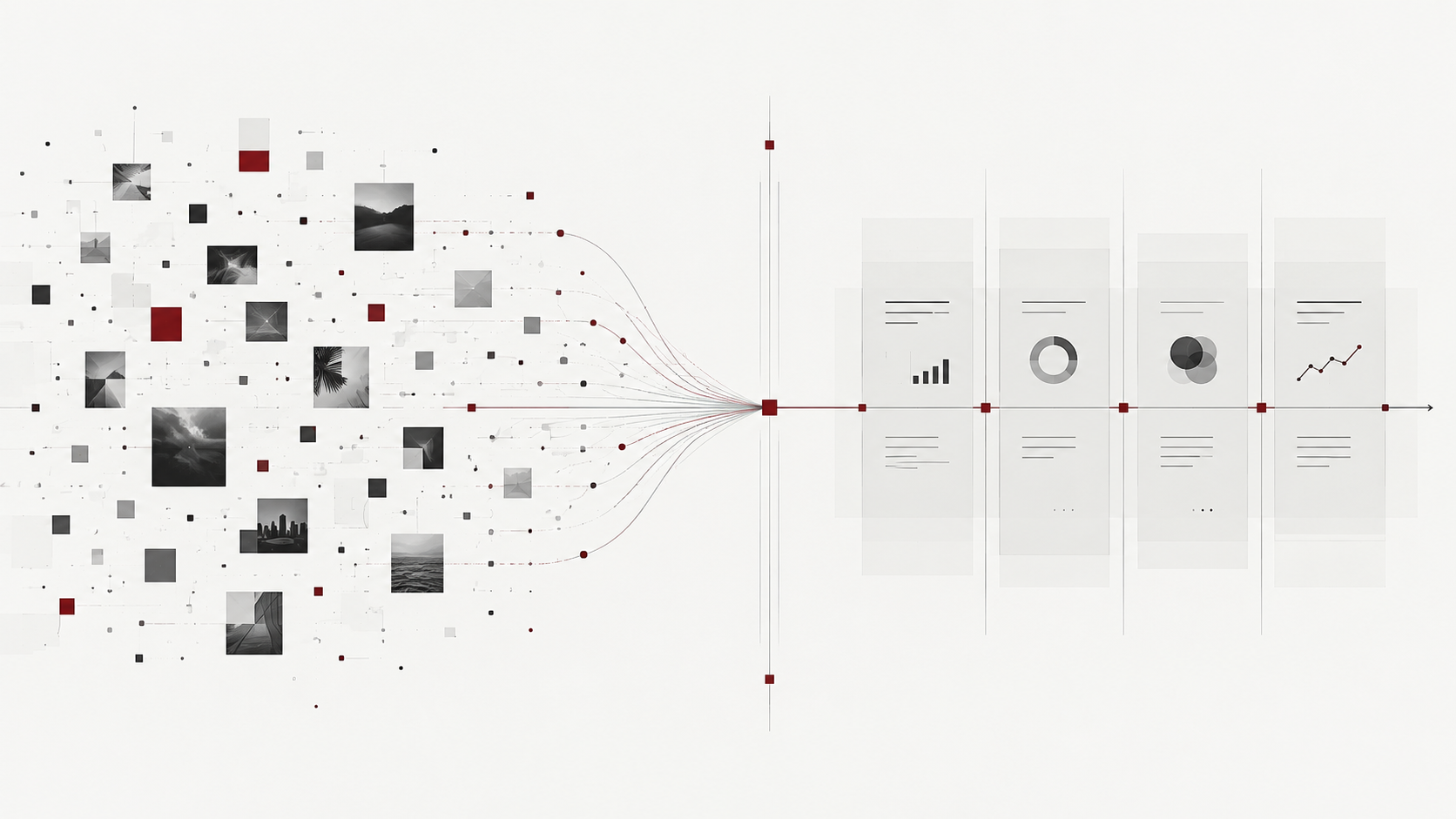
A single campaign can still involve discovery platforms, spreadsheets, email, DMs, talent representatives, rate negotiations, briefs, contracts, usage rights, platform reporting and separate internal measurement systems.
Individually, none of those things is unusual.
Collectively, they create friction as the amount of creator media being bought increases.
The problem isn’t simply that the industry needs more tools.
It has plenty of them.
The harder question is whether the information and workflows around creator media connect well enough for the channel to operate at a different scale.
Creator discovery has improved enormously.
Marketers can search creators by audience, category, geography, platform, content style and an expanding range of signals.
That addresses an important question:
Who might be right for this campaign?
But identifying a potentially relevant creator and being ready to make a media decision are not quite the same thing.
Buying introduces another set of questions.
What exactly is being purchased?
What information should inform the decision?
What does the price represent?
How should one opportunity be compared with another?
What will success mean for this campaign?
And what should the buyer learn afterward?
These questions become more important, not less, as investment grows.
IAB’s creator-economy research reflects some of the same tension. Despite rapid spending growth, marketers continue to identify creator selection, measurement, standards and operational tools as areas where the market needs to improve. IAB: Creator Economy Ad Spend & Strategy Report
Discovery helped unlock the creator economy.
It does not solve everything required to operate creator media as a mature channel.
Creator pricing is another example.
Consider a creator quoting $20,000 for a campaign.
Is that expensive?
Reasonable?
A bargain?
There isn’t enough information to know.
The same $20,000 could represent materially different opportunities depending on the content requirements, distribution, usage rights, exclusivity, timing, audience and role the creator is expected to play.
The creator may be the same.
The media being purchased may not be.
This doesn’t mean creator pricing needs one universal formula.
Quite the opposite.
The diversity of creator media is part of what makes the channel valuable.
A creator’s value also cannot be reduced neatly to follower count, engagement rate, historical rate cards or sales commission.
Different campaign objectives create different forms of value.
As buyers allocate more money to the channel, however, they need enough context to understand the economics of what they are considering.
The opportunity is not to make creators interchangeable.
It is to make creator-media decisions better informed.
The same issue appears after the campaign runs.
Creator media can generate awareness, reach, attention, engagement, consideration, traffic, sales and other outcomes depending on what the advertiser is trying to accomplish.
But collecting metrics and creating useful intelligence are not the same thing.
In early 2026, IAB described creator measurement as a landscape still constrained by fragmented metrics, siloed platforms and gaps in the standards and financial rigor required to integrate creators more fully into enterprise media strategies. IAB: The As-Is Measurement Landscape in the Creator Economy
The challenge isn’t simply getting more data.
It’s making the information useful.
A campaign report can describe what happened.
A more mature operating model should eventually help a buyer understand what that outcome means for the next decision.
What worked?
Under what conditions?
Against which objective?
What should be repeated?
What should change?
What do we actually know now that we did not know before the campaign?
If creator media is becoming an enduring part of the media plan, each campaign should contribute to the knowledge used to plan the next one.
Too often, that learning remains fragmented along with the data.
AI will change creator marketing.
It already is.
It can make large volumes of information easier to search, organize, summarize and interpret. It can reduce manual work and help people identify patterns that would otherwise be difficult to see.
But applying AI to fragmented information does not automatically create a better operating model.
The quality of the intelligence still depends on the quality and context of the information underneath it.
This may become one of the more important distinctions as AI adoption accelerates across advertising.
The industry does not simply need more automation.
It needs better information around the decisions being assisted by automation.
There is another risk in the way the industry talks about maturity.
Creator media became valuable precisely because creators are not interchangeable.
Their voices are different.
Their communities are different.
Their relationships with those communities are different.
Their creative judgment is different.
More structure around creator media should not mean standardizing those differences away.
There is a meaningful distinction between standardizing the creator and improving the structure around the transaction.
Better information, clearer commercial context and more useful measurement do not require making human creativity uniform.
In fact, the opposite may be true.
The less operational friction exists around creator media, the more room there may be to focus on the parts that actually should remain human: judgment, ideas, relationships and creative work.
Maturity should not mean making creators behave more like traditional inventory.
It should mean building a better operating environment for a form of media that is fundamentally different.
The creator economy has already accomplished something significant.
It created a class of media important enough that advertisers are allocating tens of billions of dollars to it.
The next phase may be less visible than the rise of creators themselves.
It is about the systems surrounding the media.
How opportunities are evaluated.
How pricing is understood.
How buying decisions are made.
How outcomes are measured.
How learning carries forward.
And how all of that becomes more structured without removing what made creator media valuable in the first place.
At Xrossworld, we believe these operating questions will become more important as creator media takes a larger place in the media plan.
They are also the questions we intend to explore here.
Welcome to the Xrossworld Journal.
Perspectives on creator media, infrastructure and the market around it.